Matcha Tea Uses: Beyond Drinking - Skincare, Baking and Wellness
If you're curious about trying matcha beyond your morning cup, it helps to start with good quality leaves. Browsing our matcha range is a useful first step, since different grades suit different jobs, whether that's drinking, baking, or blending into a smoothie.
There's also a practical side to exploring matcha tea uses. A single tin can genuinely do double or triple duty in your kitchen, replacing a handful of separate products, from food colouring to face masks, with one natural ingredient you're probably already using anyway.
What Gives Matcha Its Versatility?
To understand the wide range of matcha tea uses, it helps to know what's actually inside the powder. Matcha is made from whole, stone-ground tea leaves, so unlike steeped green tea, none of its natural compounds get left behind or discarded.
Matcha tea properties include a concentrated dose of catechins, particularly EGCG, along with chlorophyll and the amino acid L-theanine. These compounds are what give matcha its antioxidant strength, its calming energy release, and its deep green colour. It's this same combination of properties that makes matcha useful for far more than a single cup of tea; the same qualities that support your body from the inside can also work externally, or bring flavour and colour to food.
This is also why matcha behaves so differently from artificial green food colouring or standard tea extracts. Because you're using the whole leaf in powder form, every property stays intact, whether you're whisking it into water, folding it into batter, or mixing it into a face mask. Nothing is lost along the way, which is part of why matcha tea uses have expanded so far beyond the teacup.
Matcha Baking: A Natural Fit for Desserts
Matcha baking has become one of the most popular ways to use this tea beyond drinking it. Its slightly bitter, grassy edge balances out sweetness beautifully, which is why it pairs so well with vanilla, white chocolate, coconut, and citrus in baked goods.
Doughnuts, pavlovas, macarons, and shortbread are all common places to find matcha baking at work, either folded into the base or used as a glaze or dusting on top. Because matcha is heat-stable, it holds its colour and flavour reasonably well through baking, though many recipes still add it after cooking, such as in a glaze, to preserve its brightest green shade and freshest taste.
Sifting matcha before adding it to dry ingredients is a small but important step in baking, much like when whisking it into water. Skipping this can leave small clumps of powder throughout a bake, which affects both the texture and the way the flavour comes through in each bite.
Matcha Smoothies and Frozen Treats
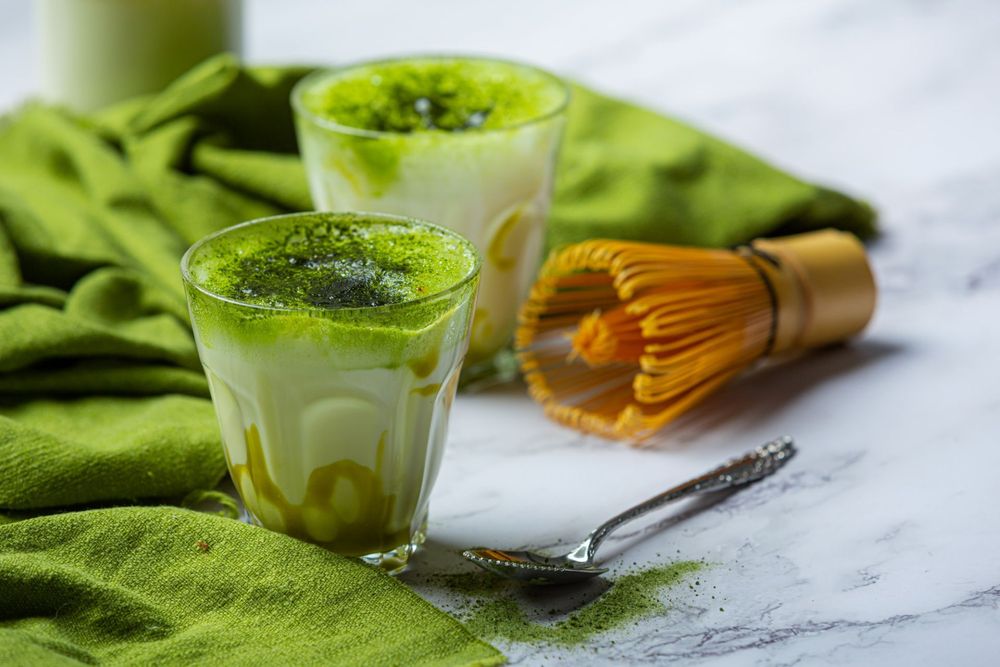
Matcha smoothies are another easy way to work this tea into your day, particularly if you're not a fan of drinking it on its own. Blending matcha with banana, spinach, or plant-based milk mellows out its stronger notes while keeping the earthy, grassy character intact.
Beyond smoothies, matcha also works well in frozen desserts. Our frozen yogurt bark recipe swirls matcha yogurt with vanilla yogurt and fresh strawberries, then freezes the mixture into a marbled bark that's perfect for warmer months. It's a good example of how far matcha tea uses can stretch beyond a simple cup, without needing any special baking skills.
Matcha for Skincare
Matcha's antioxidant content is exactly why it's found its way into skincare routines too. The same catechins that help protect your body from free radicals can also help protect your skin from environmental stress, giving it a brighter, more even appearance, often referred to as the matcha glow.
Matcha's EGCG content has also been linked to improved skin hydration, a reduction in visible fine lines, and support for skin cell renewal. Some people apply matcha topically as a simple face mask, mixing the powder with water, yoghurt, or honey, while others prefer to rely on drinking it regularly for the same antioxidant benefits from the inside out. Either way, matcha skincare is a natural extension of the tea's internal benefits rather than a separate trend entirely.
A basic matcha face mask can be as simple as combining a teaspoon of matcha with a spoonful of plain yoghurt or honey, left on the skin for around ten minutes before rinsing off. It's a low-effort way to make use of a tin of matcha that's sitting in the cupboard, particularly if you have a culinary grade that isn't quite delicate enough for your morning cup.
Choosing the Right Grade for Each Use
Not every matcha is suited to every job, which is where culinary grade uses come in. Ceremonial grade matcha is made from the youngest, most delicate leaves and is designed to be whisked with just water, since its smoother, sweeter flavour would otherwise be lost in stronger ingredients.
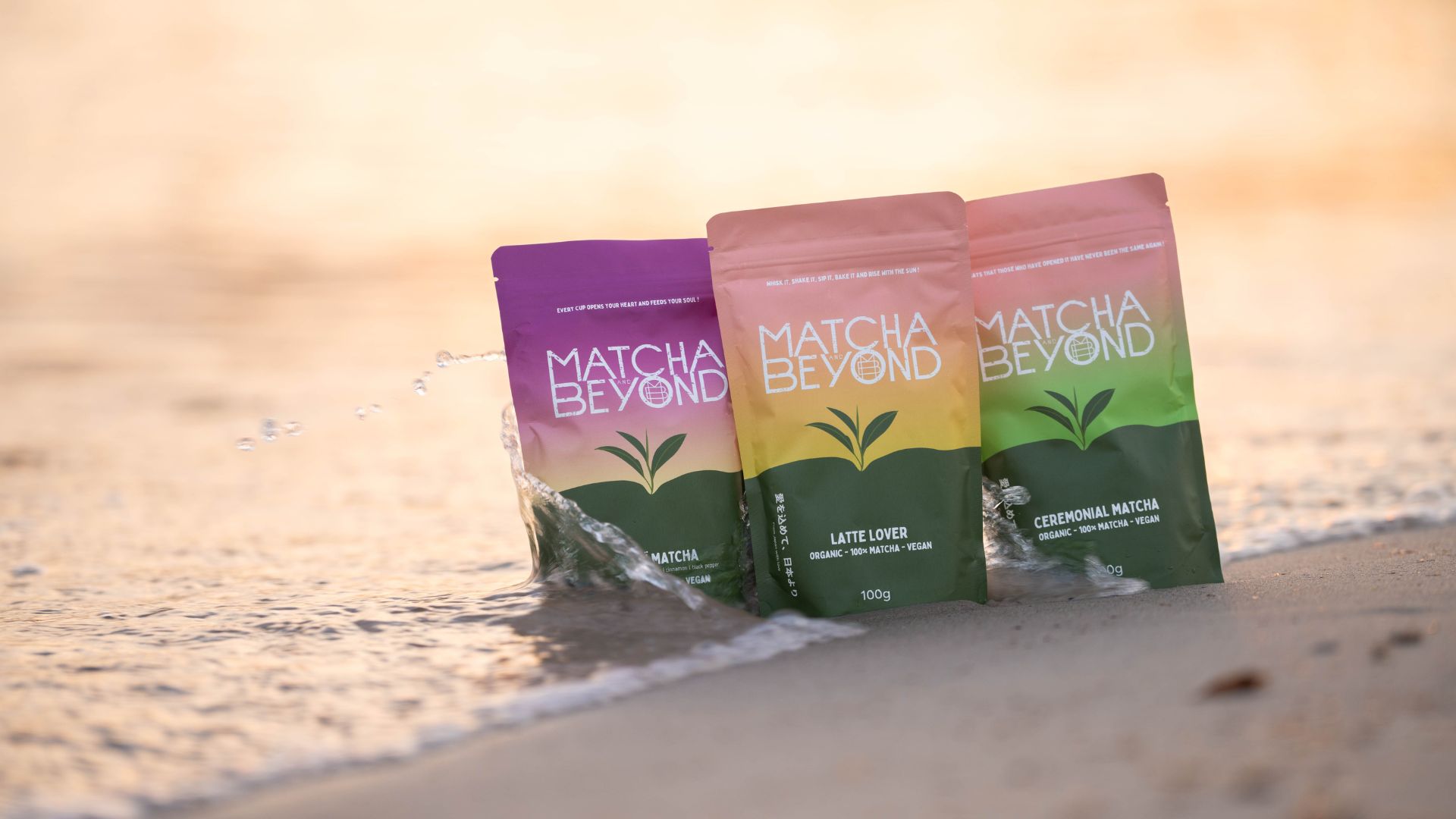
Culinary grade uses, on the other hand, are built for exactly that: standing up to milk, sugar, fruit, and heat. A slightly more robust flavour works in your favour here, since it still comes through clearly in a latte, a smoothie, or a batch of baked goods, without needing to be as delicate as a ceremonial-grade cup. At Matcha And Beyond , the different grades are selected with exactly this in mind, so you're not using a delicate ceremonial matcha where a stronger culinary grade would work better, or vice versa.
Other Everyday Matcha Tea Uses
Beyond food and skincare, matcha has found its way into a handful of other everyday habits. Some people use it as a natural dye for icing, batters, or even homemade playdough, thanks to its strong, stable green colour. Others incorporate it into their wellness routines in less obvious ways, such as adding a small amount to bathwater or using it in DIY scrubs alongside sugar or oil.
None of these uses require anything beyond the matcha you'd already have in your kitchen cupboard. Once you start looking, it becomes clear just how adaptable this tea really is, well beyond the traditional bowl and whisk.
If you've got a tin of matcha that's been sitting unused for a while, trying even one of these alternative uses is a good way to get more value from it, rather than letting it go stale in the back of a cupboard.
Final Thoughts
Matcha tea uses go well beyond your morning cup, from baking and smoothies to skincare and everyday wellness habits. The same properties that make it a healthy alternative to coffee, its antioxidants, chlorophyll, and natural compounds, are exactly what make it so useful in other parts of your routine too.
If you'd like to learn more about how each grade is selected and sourced before it reaches your kitchen, the story behind Matcha and Beyond covers exactly that.
Frequently Asked Questions
What are the main matcha tea uses beyond drinking?
Can I use ceremonial grade matcha for baking?
Is matcha good for skincare?
Does matcha lose its properties when baked?
What's the difference between culinary grade and ceremonial grade matcha?