Matcha Tea Benefits - How It Compares to Green Tea for Antioxidants
Steeped green tea is brewed from leaves that are then discarded, while matcha is the entire leaf, ground into a fine powder and consumed whole. That single difference in preparation is the reason matcha tea benefits are often described as more concentrated than the matcha tea benefits or green tea benefits you would get from a standard steeped cup.
This matters most when it comes to antioxidants. Because matcha tea benefits come from drinking the whole leaf rather than just its steeped water, matcha delivers a higher catechin content per cup than an equivalent serving of green tea. Understanding why that happens, and what it means for your daily cup, makes it much easier to see where matcha tea benefits earn their reputation, and why matcha is considered one of the most antioxidant-rich beverages available. This article walks through the science-backed matcha tea benefits one by one, from catechin content to EGCG, so you can see exactly how matcha tea benefits stack up against a standard cup of green tea.
Whole-Leaf vs Steeped Tea: The Core Difference Behind Matcha Tea Benefits
The clearest way to understand matcha tea benefits is to compare how matcha and green tea actually reach your cup. With steeped green tea, hot water is poured over loose leaves or a tea bag, and only the compounds that dissolve into the water end up in your drink. The leaves themselves are then strained out and thrown away, along with whatever nutrients stayed locked inside the leaf, and along with them, some of the matcha tea benefits you would have gotten from the whole leaf.
Matcha skips that step entirely. Because organic matcha tea is literally ground tea leaves, drinking a cup of matcha means consuming the entire leaf rather than a diluted infusion of it. This whole-leaf vs steeped tea distinction is the foundation of matcha tea benefits: nothing is filtered out, so you get the full nutritional content of the leaf in every sip, not just the fraction that happened to dissolve during a few minutes of steeping. It is the single biggest reason matcha tea benefits are consistently described as stronger than what a steeped cup can offer.
Catechin Content and Matcha Tea Benefits: Why Matcha Comes Out Ahead
Catechins are the natural plant compounds behind many of the antioxidant properties associated with green tea and matcha. Because matcha is made from whole, ground leaves rather than steeped and discarded ones, matcha will tend to have more catechins and antioxidants than steeping green tea leaves in water. This catechin content is one of the clearest, most measurable matcha tea benefits: a higher catechin content per cup, simply because none of the leaf is left behind.
This catechin content is a large part of why matcha tea benefits include such a strong antioxidant reputation. A concentrated amount of antioxidants in every cup may help reduce cell damage and support the body's defence against everyday oxidative stress, which is one of the central matcha tea benefits people reach for it in the first place, and one that a lower catechin content simply cannot match.
EGCG Comparison and Matcha Tea Benefits: A Closer Look at the Standout Compound
Among the catechins found in tea, EGCG carries much of the credit for green tea and matcha's benefits. Matcha contains high levels of EGCG, and research points to notable effects on the skin, including better hydration, reduced wrinkle formation, and support for skin cell renewal. This EGCG comparison is one of the more specific matcha tea benefits worth knowing, since it explains why matcha is so often associated with the "matcha glow" people talk about, and why this particular EGCG comparison keeps coming up whenever matcha tea benefits are discussed.
Because matcha is consumed as a whole, ground leaf rather than a steeped liquid, its EGCG content is not lost to the compost bin the way it is with brewed and discarded green tea leaves. That is the practical reason an EGCG comparison between matcha and green tea tends to favour matcha so consistently, and why matcha tea benefits around skin health are frequently mentioned alongside its antioxidant profile.
Beyond Antioxidants: Wider Matcha Tea Benefits
Antioxidants and catechin content are only part of the picture. Matcha tea benefits also extend to brain function, energy, detoxification, and heart health, all rooted in the same whole-leaf advantage that drives its catechin content and EGCG comparison numbers so high.
- Brain function : Among the well-known matcha tea benefits, improved attention and memory stand out. Matcha contains both caffeine and L-theanine, a combination that can improve cognitive function and increase focus and alertness, making it a popular choice for concentration in the morning.
- Sustained energy : Another of the practical matcha tea benefits is steady energy. The amino acid L-theanine found in matcha allows its caffeine to release at a slower, more sustainable pace throughout the day. Matcha contains approximately 70mg of caffeine per cup, compared to around 35mg in green tea and about 95mg in a cup of coffee, offering clean energy for three to six hours without the jitters.
- Detoxification support : Matcha is packed with chlorophyll, which helps cleanse the bloodstream and remove heavy metals and other toxins, supporting the liver's natural role in processing nutrients and repairing the body. This detox angle is one of the lesser-known matcha tea benefits.
- Heart health : Research shows that consuming matcha can significantly reduce LDL, or "bad", cholesterol, which is linked to a higher risk of strokes and heart attacks. Combined with a healthy diet and lifestyle, this heart-health angle rounds out the list of matcha tea benefits, alongside the antioxidant and catechin content advantages already covered. Taken together, these matcha tea benefits show why matcha is valued for more than just its taste.
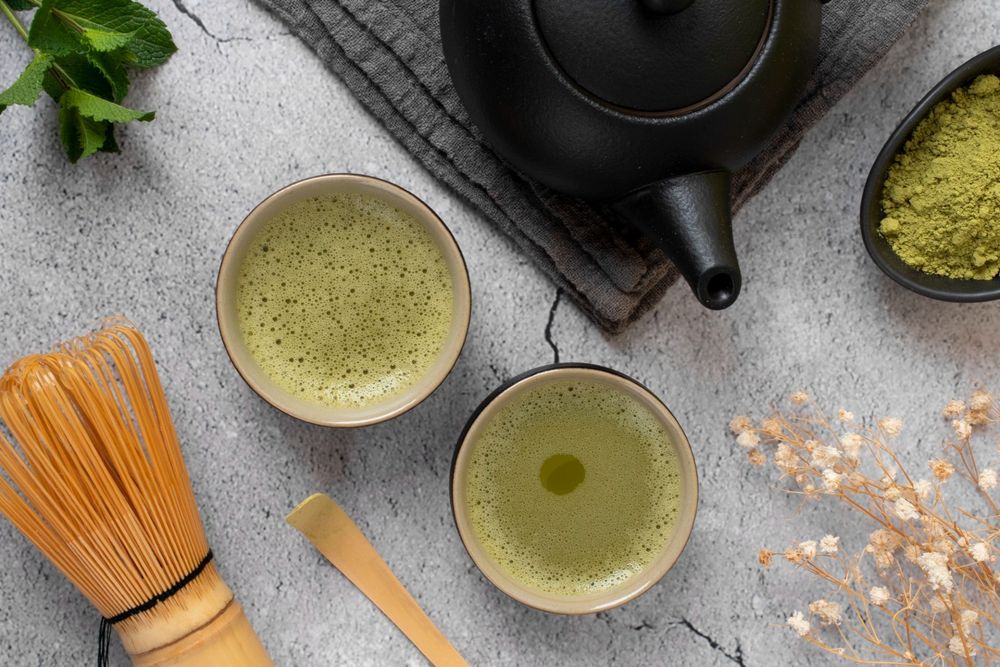
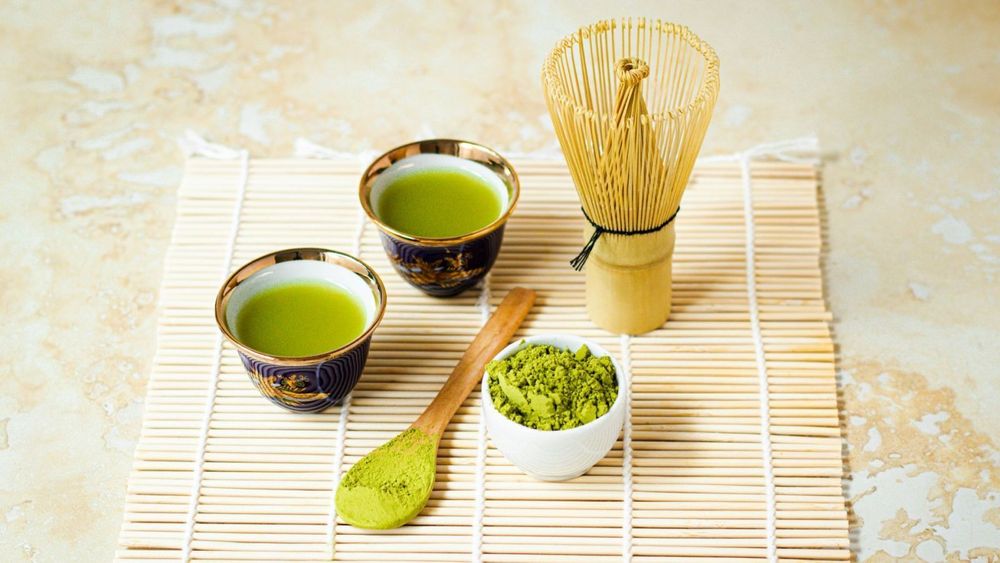
If you want to experience these matcha tea benefits at their best, proper preparation matters just as much as the powder itself, and having the right matcha whisk and tools on hand helps you whisk the powder evenly so none of its nutrients, or its matcha tea benefits, go to waste in a clumpy, poorly mixed cup.
Green Tea and Matcha Benefits: Comparing Matcha Tea Benefits to a Standard Cup
Green tea and matcha benefits are not opposites; they sit on the same spectrum, with matcha tea benefits simply offering a more concentrated version of what steeped green tea provides. Green tea still delivers antioxidants, caffeine, and L-theanine, just at lower levels because so much of the leaf's content is strained out and discarded rather than consumed.
For anyone deciding between the two, it comes down to how concentrated you want your cup to be. If you are looking for the fullest expression of green tea and matcha benefits in a single serving, matcha's whole-leaf preparation makes it the stronger choice for catechin content, EGCG, and the antioxidants that come with both, which is exactly why matcha tea benefits are so often ranked above standard green tea benefits from a steeped cup.
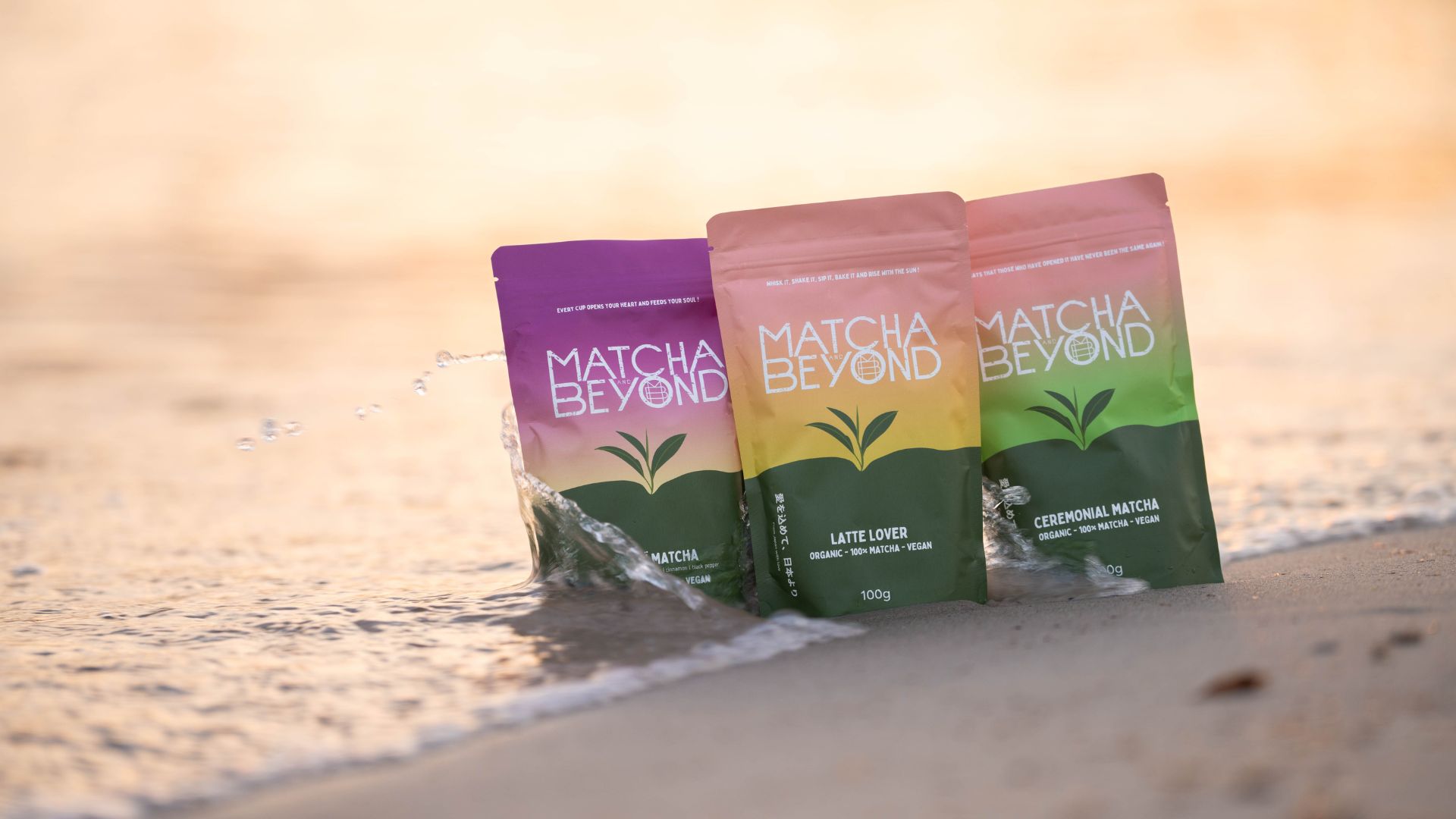
At Matcha & Beyond , matcha is sourced from organic tea gardens in Kagoshima and Uji, Japan, and is carefully selected to preserve these whole-leaf matcha tea benefits from garden to cup. Choosing organic, high-quality matcha, free from anti-clumping agents, is part of what protects the catechin content and EGCG levels behind these matcha tea benefits, and what makes matcha stand apart from an ordinary cup of green tea.
Getting the Most Out of Matcha Tea Benefits
Even the best matcha loses some of its matcha tea benefits if it is prepared carelessly. A few simple habits help you capture the full range of matcha tea benefits at home:
- Use a fine mesh sieve before whisking, so the powder is smooth and every part of the leaf, and its matcha tea benefits, are properly incorporated into your cup.
- Whisk with hot water around 75 to 80°C in a brisk back-and-forth or zig-zag motion for about fifteen seconds to fully activate the powder and unlock its matcha tea benefits.
- Choose organic, high-quality matcha made from 100% tea leaves, since additives can dilute the very catechin content and EGCG that drive matcha tea benefits.
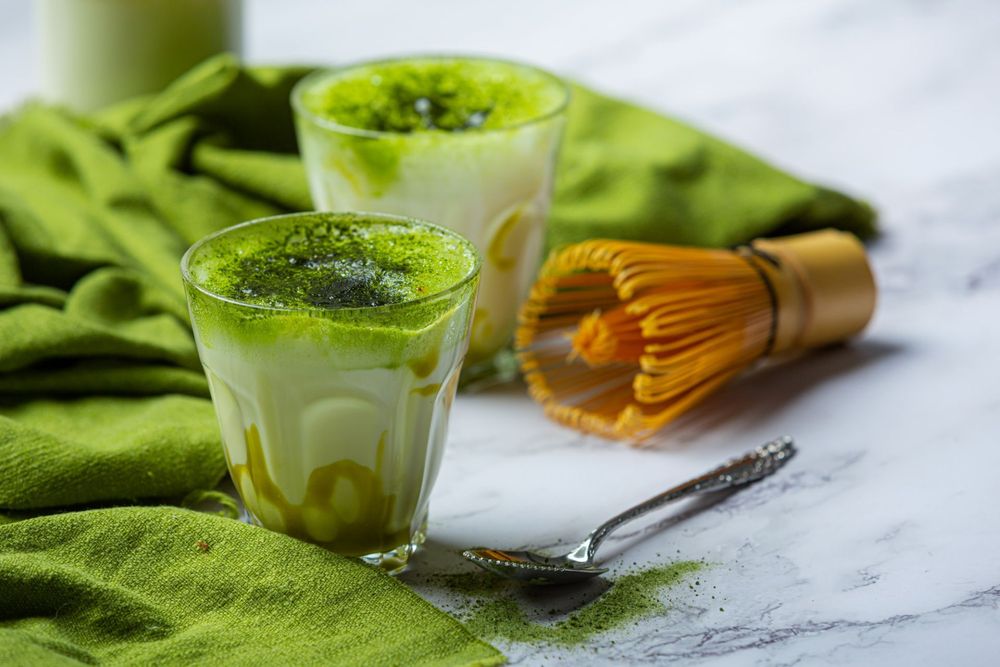
- Drink it as prepared, whether with water, milk, or in a smoothie, since the whole leaf, and its matcha tea benefits, are already in your cup either way.
Choosing matcha over a steeped cup is, in short, a choice to capture more of the matcha tea benefits already present in the leaf, rather than leaving a portion of them behind in the strainer.
Conclusion
Matcha tea benefits are ultimately about what stays in the cup rather than what gets strained out, and that whole-leaf advantage is what separates matcha tea benefits from an everyday cup of green tea.
Ready to taste the difference for yourself? Explore the matcha collection and find the grade that fits how you want to enjoy your daily antioxidants.
Frequently Asked Questions
What are the main matcha tea benefits compared to green tea?
Why does matcha have more catechins than green tea?
What does the EGCG comparison show between matcha and green tea?
Does matcha have more caffeine than green tea?
Can you get green tea and matcha benefits from the same cup?
Does preparation affect matcha tea benefits?